Geospatial Temporal Analysis: Using ML to Track How Threats Evolve Across Space and Time
 R. Tanaka
Most threat analysis happens in snapshots. An analyst pulls a report, reviews imagery from a specific date, checks a location, draws a conclusion. The problem with snapshots is that threats don't sit still. They move, adapt, and follow patterns that only become visible when you watch them across both space and time simultaneously.
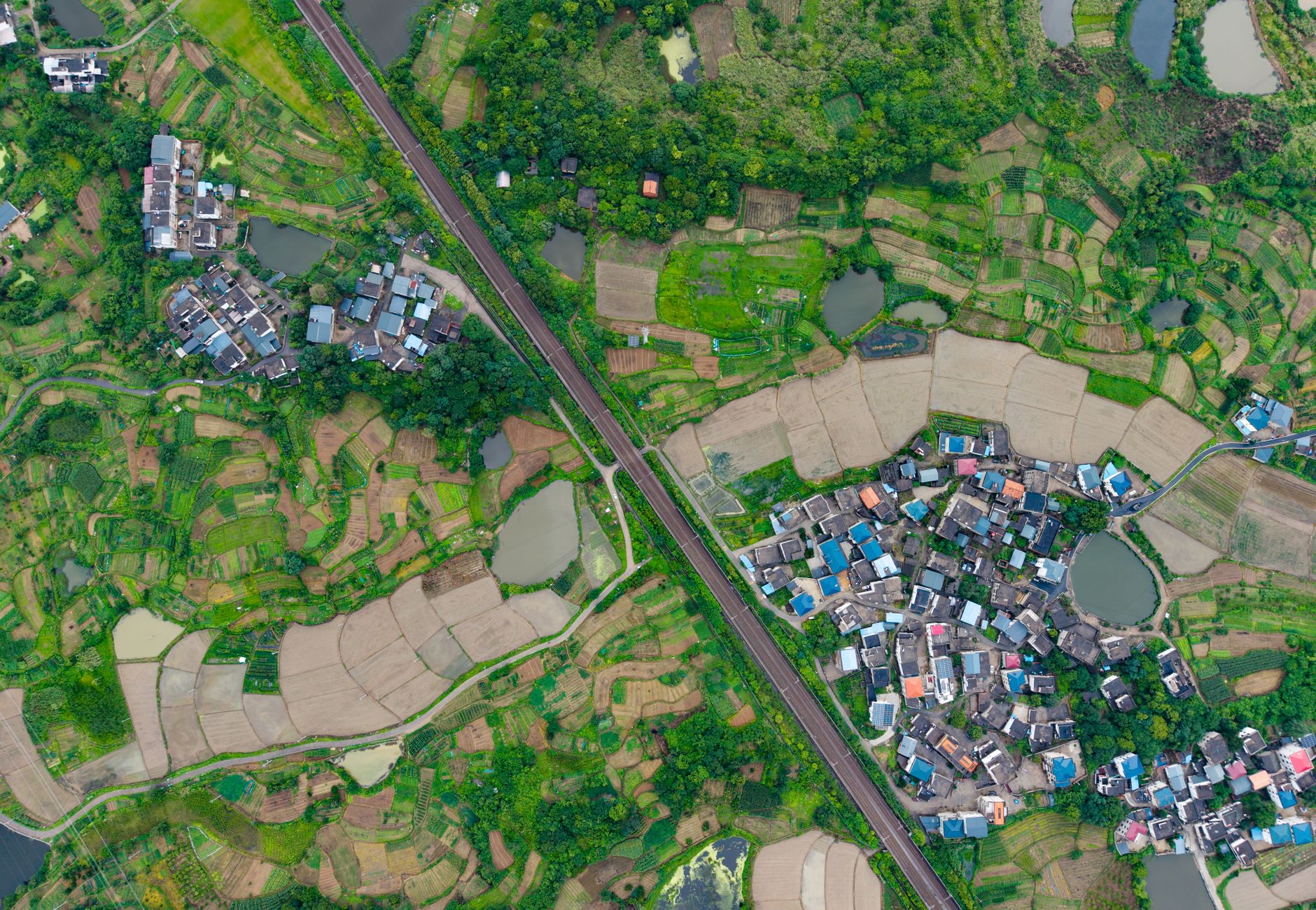 Photo by
 Geospatial temporal analysis closes that gap. By combining location-aware ML models with time-series reasoning, analysts can shift from describing where a threat is to predicting where it's going.
Why Geospatial and Temporal Data Break Traditional Pipelines
Standard classification models treat every sample as independent. Feed in a satellite image, get a label. Feed in a SIGINT record, get an entity. That works for detection. It fails for behavior.
Behavior is relational. A vehicle observed at a border crossing three times in two weeks means something different than the same vehicle appearing once. A mobile phone pinging towers in a specific sequence implies movement that a single tower hit can't reveal. Understanding that difference requires models that hold state across time and anchor that state to geography.
Most IC data pipelines weren't built to do both at once. Geospatial data lives in one system; temporal records live in another. Fusing them at query time is slow and error-prone. Building models that operate natively on spatiotemporal data requires rethinking the pipeline from ingestion forward.
The Model Stack That Actually Works
Three model types carry most of the load in production geospatial temporal systems:
Graph-based spatiotemporal networks represent locations as nodes and movements as edges, with timestamps embedded in the edge weights. When a new observation arrives, the model updates edge probabilities and can surface anomalous transitions: a route segment that's statistically improbable given prior movement patterns in that region.
LSTM and transformer hybrid models handle the sequence component. Transformers handle long-range dependencies well but struggle with irregular time intervals, which is exactly what field intelligence produces. Pairing a transformer encoder with an LSTM layer that learns to weight irregular timestamps produces more stable results on sparse, real-world data than either architecture alone.
Spatial embedding layers encode geographic context directly into the feature space. Instead of passing raw coordinates, you encode the semantic neighborhood: proximity to infrastructure, historical activity density, terrain classification. Models trained with spatial embeddings generalize better across theaters because they learn relationships, not just coordinates.
graph TD
    A[/Raw Observations/] --> B(Spatiotemporal Feature Extraction)
    B --> C{Anomaly Threshold}
    C --> D[Graph-Based Movement Model]
    C --> E[LSTM-Transformer Sequence Model]
    D --> F((Fused Prediction Layer))
    E --> F
    F --> G[Analyst Alert Queue]
Where This Beats Human Analysis
Humans are good at pattern recognition within a single domain and a short time window. Ask an analyst to review 72 hours of movement data for one target and they'll perform well. Ask them to hold six months of irregular observations across fourteen locations for a network of thirty entities and accuracy degrades fast. Memory is a bottleneck; cognitive load is real.
ML models don't have that problem. A spatiotemporal model can ingest years of movement history for hundreds of entities, learn the baseline rhythm of each, and flag the moment something deviates. The deviation might be subtle: a supply convoy that normally moves on a Tuesday now moving on a Saturday, combined with a 12-kilometer route shift. Neither signal alone trips a threshold. Together, they matter.
This is where the analyst's role shifts. The model surfaces the anomaly; the analyst decides what it means. That division of labor, when implemented well, is more productive than either working alone.
The Data Quality Problem Nobody Talks About
Geospatial temporal models are punishing about data quality in ways that standard NLP models are not. A missing timestamp breaks sequence ordering. A coordinate jitter of 50 meters can merge two distinct locations in a densely built environment. Sensor dropout creates artificial gaps that look like behavioral pauses.
Building preprocessing pipelines that handle these conditions gracefully is unglamorous work. It's also the work that determines whether the model is useful in the field or just impressive in a demo. Imputation strategies for missing timestamps, coordinate normalization relative to known reference points, and explicit uncertainty flags on low-confidence observations should all be baked into the ingestion layer before a single model ever trains.
What's Coming
Foundation models trained on global geospatial data are starting to appear, most notably from research groups working on satellite imagery and mobility datasets. The intelligence community's classified equivalents are still immature, but the direction is clear: pre-trained spatiotemporal representations that analysts can fine-tune on domain-specific data without building from scratch.
When those models mature, the cost of standing up a geospatial temporal analysis capability drops significantly. The hard part won't be the model. It will be connecting the model to data pipelines that are clean enough, fast enough, and authorized enough to feed it. That infrastructure problem is where the next several years of effort will concentrate.
Get Intel DevOps AI in your inbox
New posts delivered directly. No spam.
No spam. Unsubscribe anytime.