Graph Neural Networks for Link Analysis: Mapping Hidden Connections in Intelligence Data
 R. Tanaka
Traditional link analysis tools break down when faced with modern intelligence datasets. The problem isn't volume, it's complexity. Social networks, financial flows, communication patterns, and logistics chains create multi-dimensional webs that resist conventional graph algorithms.
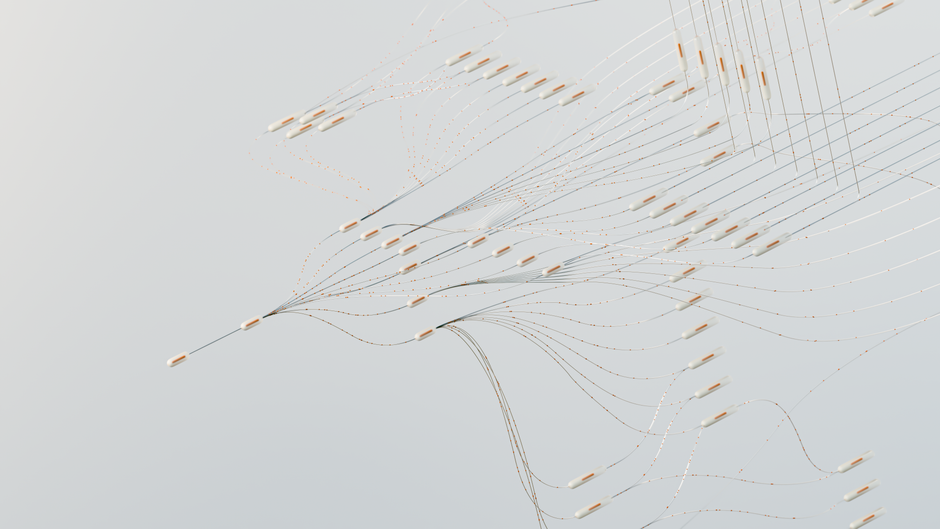
Graph Neural Networks (GNNs) change this equation entirely.
Where classical approaches rely on predefined metrics like betweenness centrality or clustering coefficients, GNNs learn representations directly from network topology and node features. This matters because real intelligence networks don't follow textbook patterns. A seemingly peripheral actor might bridge two major criminal organizations. A low-traffic communication channel could carry the most sensitive information.
Why Traditional Graph Analysis Falls Short
Most intelligence analysts still depend on tools built for simpler problems. Gephi visualizations and SQL joins work fine for straightforward relationship mapping. But they miss emergent patterns that only become visible when you consider the entire network structure simultaneously.
Consider a typical counter-terrorism investigation. You have:
- Communication metadata (who called whom, when)
- Financial transactions (money flows, timing)
- Movement data (travel patterns, co-location)
- Social connections (family, associates, shared affiliations)
Traditional analysis examines each layer separately, then attempts manual correlation. GNNs process all dimensions together, learning how different relationship types reinforce or contradict each other.
Graph Neural Network Approaches for Intel
Three GNN variants prove especially valuable for intelligence applications:
Graph Convolutional Networks (GCNs) excel at node classification tasks. Is this financial account likely involved in money laundering? GCNs consider not just the account's transaction history, but the behavior patterns of its entire neighborhood, suppliers, customers, intermediaries.
Graph Attention Networks (GATs) automatically weight the importance of different connections. When analyzing a target's communication network, GATs might discover that text message frequency matters more than call duration for predicting operational activity.
GraphSAGE models handle massive, dynamic networks by sampling neighborhoods rather than processing complete graphs. This scalability becomes crucial when working with datasets containing millions of entities and relationships.
graph TD
    A[Raw Intelligence Data] --> B[Entity Extraction]
    B --> C[Relationship Mapping]
    C --> D[Graph Construction]
    D --> E[Feature Engineering]
    E --> F[GNN Training]
    F --> G[Link Prediction]
    F --> H[Node Classification]
    F --> I[Anomaly Detection]
    G --> J[Intelligence Products]
    H --> J
    I --> J
Implementation Challenges
Deploying GNNs in production intelligence workflows requires solving several technical problems that academic papers rarely address.
Data fusion remains the biggest headache. Intelligence databases weren't designed for graph processing. Entity resolution across multiple systems, handling conflicting relationship assertions, and maintaining data lineage all require custom preprocessing pipelines.
Temporal dynamics pose another challenge. Most GNN research assumes static graphs, but intelligence networks evolve constantly. New actors appear; old connections fade; relationship strengths fluctuate based on operational cycles. Dynamic GNN variants exist, but they're computationally expensive and harder to interpret.
Explainability can't be ignored in intelligence contexts. Analysts need to understand why the model flagged specific connections or entities. Attention mechanisms help, but they don't provide the causal reasoning that intelligence consumers expect.
Operational Impact
Despite these challenges, early GNN deployments show measurable improvements over traditional methods. One counter-narcotics unit reported 40% better precision in identifying money laundering networks. A cyber threat intelligence team reduced false positives by 60% when attributing attack campaigns to specific threat actors.
The real value isn't just accuracy, it's speed. GNNs can process relationship queries that would take analysts weeks to investigate manually. They surface non-obvious connections that might never appear in conventional analysis.
What makes this particularly powerful: GNNs generate hypotheses, not just answers. They highlight relationship patterns worth investigating, potential missing links, and entities that don't fit expected behavioral profiles.
The intelligence mission demands tools that match the complexity of modern threats. Graph Neural Networks represent exactly this kind of evolution, machine intelligence that thinks in networks, not just nodes.
Get Intel DevOps AI in your inbox
New posts delivered directly. No spam.
No spam. Unsubscribe anytime.