Human-Machine Teaming in Intelligence Analysis: Designing Workflows Where Analysts and AI Actually Work Together
 R. Tanaka
Most deployments of AI in intelligence analysis follow the same implicit model: the machine processes, the human reviews. That handoff sounds clean on a whiteboard. In practice, it produces analysts who rubber-stamp outputs they don't understand, or who distrust the system so deeply they re-do the work manually anyway.
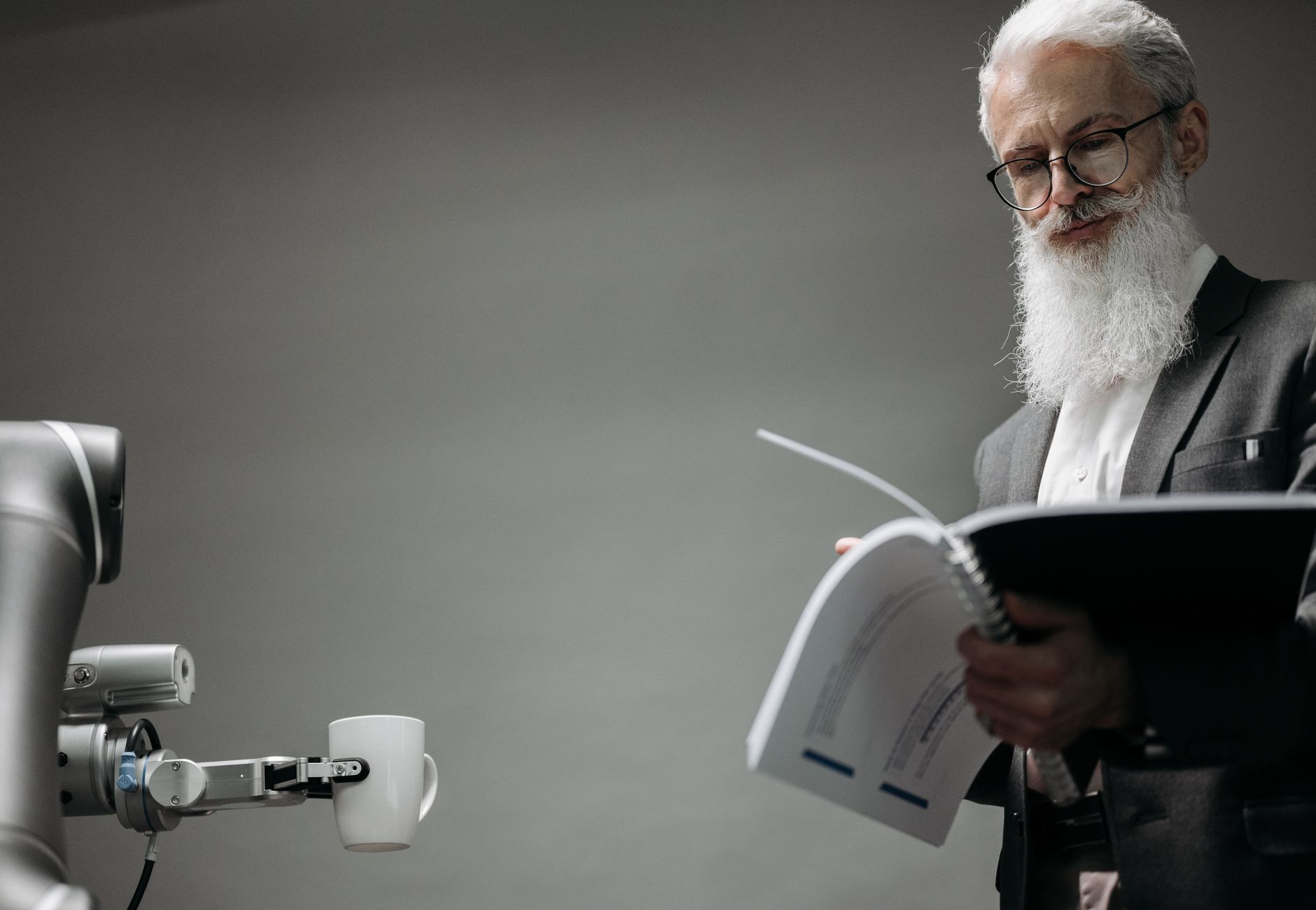 Photo by Pavel Danilyuk on Pexels.
Neither outcome is acceptable when the downstream product shapes a commander's decision.
Human-machine teaming done well is a design problem. It requires deliberate thinking about which cognitive tasks belong to the model, which belong to the analyst, and where the boundary should shift depending on time pressure, data quality, and stakes. This post lays out a practical approach to that design problem, grounded in how intelligence workflows actually run.
Why the Default Handoff Model Fails
Consider a typical OSINT pipeline. An LLM ingests thousands of documents overnight, extracts entities, clusters themes, and surfaces a ranked list of items requiring attention. The analyst arrives in the morning and sees the ranked list.
What's missing? The analyst has no view into how that ranking was generated. She can't tell whether item three ranked lower than item one because of genuine signal strength or because the training data underrepresented a particular geographic region. Trust degrades fast under those conditions. After a few weeks, she's skimming the list as a starting point and then pulling raw documents herself.
This is automation that generates extra work, not less.
The failure is architectural, not technical. The system was designed for throughput, not collaboration.
Four Teaming Patterns That Actually Work
Different task types require different collaboration structures. Forcing every workflow into a single pattern is how you get the rubber-stamp problem.
1. AI as First-Pass Filter, Analyst as Adjudicator
This works well for high-volume triage: signals traffic, social media monitoring, document ingestion. The model's job is to reduce the candidate set from ten thousand items to two hundred. The analyst's job is to make final judgments on those two hundred.
The critical design requirement here is explainability at the item level. Each surfaced item needs a short, machine-generated rationale the analyst can evaluate in under thirty seconds. Not a confidence score. A rationale. "Flagged because posting cadence matches previous IO campaign signatures from March 2025" is useful. A 0.87 probability score is not.
2. AI as Hypothesis Generator, Analyst as Critic
For more complex analytical tasks, flip the model's role. The LLM generates a set of competing hypotheses about an observed phenomenon; the analyst's job is to stress-test them, identify which ones the evidence actually supports, and document her reasoning.
This maps directly onto Analysis of Competing Hypotheses (ACH). The LLM doesn't replace structured analytic technique; it accelerates the hypothesis-generation phase so the analyst spends more time on rigorous evaluation.
3. Parallel Synthesis with Divergence Flagging
Both the analyst and the model independently analyze the same reporting, then a lightweight comparison layer surfaces where their conclusions diverge. Disagreements don't automatically mean the machine is wrong. They're prompts for reflection.
This pattern is expensive in analyst time, but appropriate for high-stakes production: strategic assessments, threat-to-life determinations, anything going to senior policymakers.
4. AI as Draft Author, Analyst as Editor
For routine reporting, the LLM writes a first draft from structured inputs. The analyst edits, challenges, and approves. Done well, this compresses production time significantly. Done poorly, it trains analysts to edit rather than think, which degrades the analytical workforce over a five-year horizon.
The safeguard is requiring analysts to document what they changed and why. That creates an audit trail and keeps the cognitive muscle active.
graph TD
    A[Raw Data Ingestion] --> B{Task Type?}
    B --> C[High-Volume Triage]
    B --> D[Complex Assessment]
    B --> E[Routine Reporting]
    C --> F(AI Filter + Analyst Adjudicates)
    D --> G(AI Hypothesizes + Analyst Critiques)
    E --> H(AI Drafts + Analyst Edits)
    F --> I[Finished Intelligence Product]
    G --> I
    H --> I
The Calibration Problem in Teaming
One underappreciated failure mode: analysts calibrate their own trust in the system based on visible errors. If the model makes a spectacular miss that the analyst catches, trust drops sharply. If the model quietly propagates a subtle bias for months without a visible failure, trust stays artificially high.
Teaming workflows need built-in calibration mechanisms. Periodic red-team exercises where analysts are shown model outputs for cases where the ground truth is known give them a realistic sense of where the system performs well and where it doesn't. This isn't optional overhead. Miscalibrated trust is operationally dangerous.
What Good Teaming Looks Like in Practice
An analyst who has a well-designed teaming workflow doesn't feel like she's supervising a machine. She feels like she's working with a capable but fallible colleague who handles the grunt work and surfaces the interesting problems for her attention.
Getting there requires three things the IC often skips: involving analysts in workflow design (not just deployment), building feedback loops so model behavior improves based on analyst corrections, and treating explainability as a first-order requirement rather than a nice-to-have.
The technology to support all of this exists today. The gap is almost entirely in how organizations choose to deploy it.
Get Intel DevOps AI in your inbox
New posts delivered directly. No spam.
No spam. Unsubscribe anytime.