Signals Intelligence Triage with ML: Prioritizing the Needle Before the Haystack Wins
 R. Tanaka
The volume problem in SIGINT collection isn't new. What's new is the gap between how fast collection grows and how slowly analyst capacity scales. Modern collection systems can ingest orders of magnitude more raw signal data than any team can meaningfully review. The traditional answer, hire more analysts, stopped being viable around 2015. The actual answer emerging now is ML-driven triage: ranking signals by intelligence value before a human ever touches them.
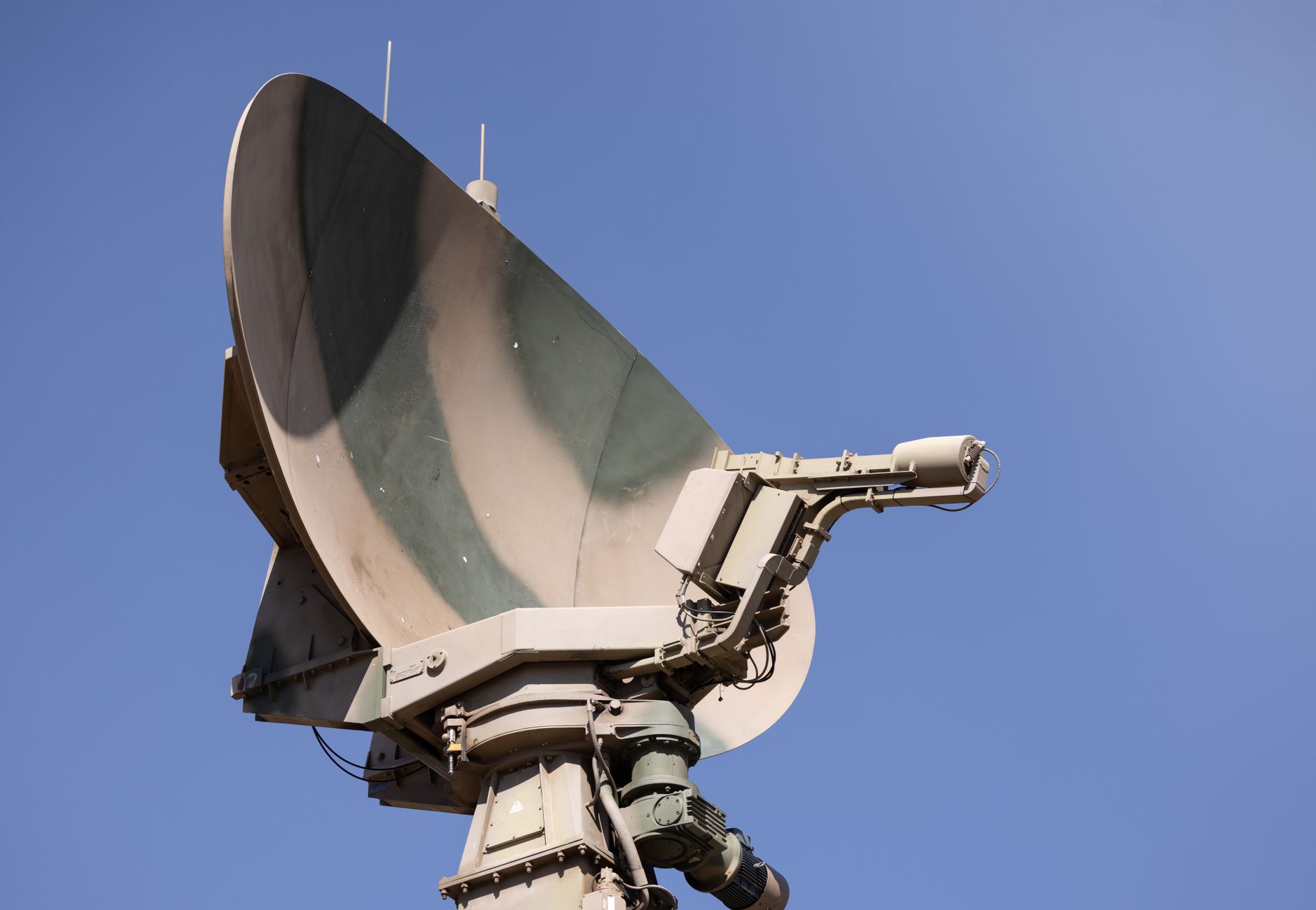 Photo by Magda Ehlers on Pexels.
This is worth unpacking carefully, because triage in an intelligence context means something specific. It doesn't mean discarding data. It means ordering the queue so that the highest-value signals surface first, the low-confidence or low-priority material waits, and analysts spend their finite hours on work that actually moves assessments forward.
Why Keyword Filters Fail at Scale
For decades, SIGINT shops relied on selector-based filtering: keyword lists, known identifiers, technical signatures. These work when you know what you're looking for. They fail in two important ways.
First, sophisticated adversaries know the selectors. Traffic that avoids flagged terms, uses coded language, or routes through clean infrastructure slides through. Second, keyword filtering produces brittle binary outputs. A signal either matches or it doesn't. There's no gradient, no confidence score, no way to express "this looks unusual even though it doesn't match a known pattern."
ML triage models solve both problems, at least partially. A well-trained classifier operating on behavioral features, metadata patterns, linguistic embedding similarity, and temporal context can flag anomalous traffic that has no surface-level match to any selector. That's the capability gap keyword filtering can't close.
Building a Triage Pipeline
A practical ML triage system for SIGINT has a few distinct stages. Feature extraction has to happen fast, often in near-real-time as signals arrive. Scoring assigns each signal a priority value. Routing sends signals to the appropriate queue or analyst workflow. Feedback loops update the model as analyst decisions confirm or override the machine ranking.
graph TD
    A[/Raw Signal Ingest/] --> B(Feature Extraction)
    B --> C{Priority Scoring Model}
    C --> D[High-Priority Queue]
    C --> E[Standard Review Queue]
    C --> F[Deferred / Archived]
    D --> G((Analyst Review))
    G --> H[Feedback Signal]
    H --> C
The feedback loop is where most deployed systems underinvest. Models trained on static historical data drift as adversary behavior evolves. Without structured analyst feedback, the priority scores degrade quietly. You won't notice the model is wrong until something important sat in the deferred queue for three days.
Feature Engineering for Signal Prioritization
What features actually predict intelligence value? That depends heavily on collection type, but some generalizations hold across domains.
Temporality matters enormously. A signal that appears once and never recurs often scores lower than one embedded in a pattern of activity. Conversely, a sudden break in an established pattern is frequently high value. Models that encode time-series features, not just point-in-time signal attributes, consistently outperform static classifiers in prioritization tasks.
Relational features help too. A signal from a previously unknown endpoint that communicates with two already-tracked entities carries more weight than the same signal in isolation. Graph-based features derived from entity relationships can be folded into triage scoring, though the compute overhead requires careful pipeline design.
Linguistic embedding similarity, where it applies, lets you score proximity to known high-value reporting without exact keyword matches. A signal semantically close to past priority reporting gets elevated. This is where fine-tuned embedding models earn their keep in a SIGINT triage context.
The Threshold Problem
Every triage system forces a calibration decision: where do you set the cutoff between "review now" and "review later"? Set it too high and you flood analysts with noise, defeating the purpose. Set it too low and genuinely important signals age in the deferred queue.
There's no universal right answer. Organizations with large analyst teams can afford lower thresholds. Smaller shops need the model to do more heavy lifting, which raises the risk of missed signals. The honest engineering answer is to treat the threshold as a tunable parameter tied to current analyst capacity, not a fixed configuration value set at deployment and forgotten.
Some shops have started dynamically adjusting thresholds based on queue depth: when analysts are clearing the high-priority queue faster than signals arrive, the threshold drops to pull in more material. When the queue backs up, it tightens. Simple logic, but it requires instrumenting the analyst workflow in ways that many legacy SIGINT platforms were never designed to support.
What Analysts Actually Need from These Systems
Analysts who've worked with ML triage consistently report the same frustration: black-box scores with no explanation. A signal ranked 0.93 priority with no supporting rationale doesn't help the analyst decide whether to act on it or push back on the model.
Explainability here means showing the features that drove the score. Not a full SHAP plot necessarily, but a human-readable summary: "Ranked high because of anomalous transmission timing, proximity to two tracked entities, and linguistic similarity to three previous high-value reports." That sentence takes seconds to generate and gives the analyst enough to make a judgment call.
Triage models that treat analysts as passive consumers of machine outputs fail. The ones that treat analysts as the final reasoning layer, and give them the raw material to exercise that judgment, tend to stick around.
Get Intel DevOps AI in your inbox
New posts delivered directly. No spam.
No spam. Unsubscribe anytime.